

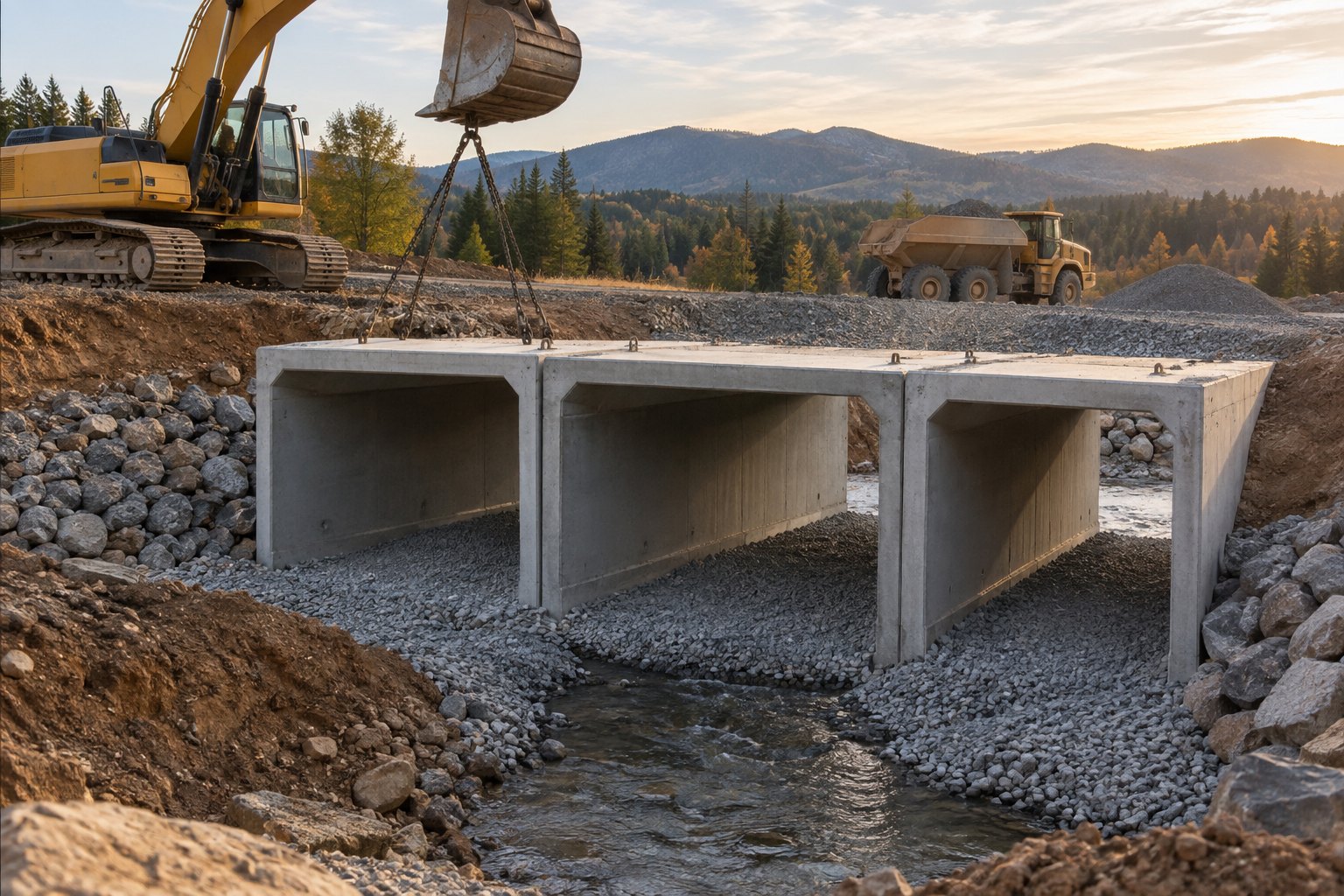
A practical approach to culvert install
A culvert carries water beneath a roadway, access drive, railway, or other crossing. Its size, shape, and alignment are established by the design for the drainage area. Installation requires coordination between the waterway, the crossing surface, and surrounding ground. Existing flow conditions and access restrictions can affect how the construction work is sequenced. Inlet and outlet elevations are essential details when a culvert crosses beneath a roadway.
Crossing plans and drainage
The project plans identify the crossing location, required elevations, culvert material, and end treatments. Survey information helps relate the proposed inlet and outlet to the surrounding drainage channel. Soil conditions, groundwater, and available access influence the excavation and foundation preparation approach. Permits and environmental requirements depend on the location and nature of the watercourse. The owner and engineer should establish any temporary flow handling requirements before construction begins.
Setting the culvert
Installation may involve excavation, preparation of the specified bedding, and placement of culvert sections. Joints and connections must follow the approved details and the manufacturer's applicable instructions. Backfill is placed around the structure in the sequence and material specified for the project. The crossing surface and adjacent slopes are restored to match the engineered arrangement. Temporary measures for managing water should remain consistent with the approved site requirements.
Checking inlet and outlet elevations
Survey checks can confirm the inlet, outlet, alignment, and elevations shown on the drawings. Inspections should occur at the stages identified in the specifications before work becomes concealed. Bedding and backfill placement may require material or compaction verification under the project documents. The completed structure should be reviewed for alignment, joint condition, and intended drainage connections. Any discrepancy or unexpected obstruction should be referred to the responsible project representatives.
Culvert work in changing flows
Seasonal flows and freezing conditions may influence culvert work in Ohio and neighboring states. Crossings farther east can involve different terrain, waterway regulations, and property access constraints. Each installation must follow its own hydraulic design and the permits governing the site. Provide crossing plans, available survey data, material requirements, and desired construction timing to APC. That information supports a discussion of access, drainage coordination, and the proposed scope.
Start the conversation.
Tell us where you’re building and what your project needs.