

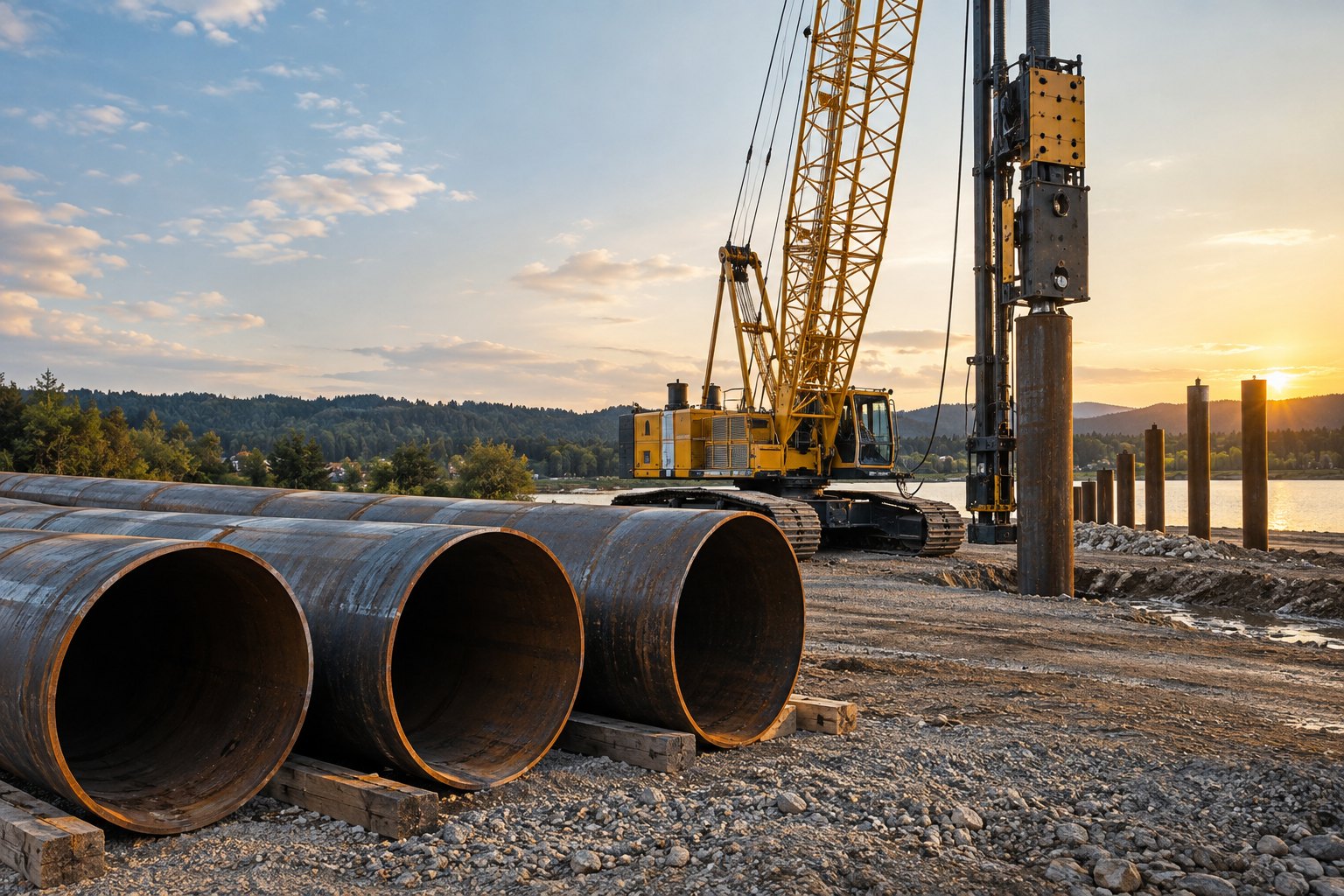
A practical approach to pipe pile driving
Pipe piles are tubular foundation elements installed where the structural design calls for them. Their diameter, wall thickness, length, and end condition depend on the engineered application. The project may use the piles to support a structure or form part of a waterfront system. Installation planning must consider ground conditions and the available space for handling the sections. A tubular section's dimensions and end condition are selected for its engineered application.
Planning tubular foundation elements
Foundation drawings and subsurface reports identify the proposed pile locations and relevant soil conditions. The project specifications define pipe dimensions, splice details, and any required driving criteria. The site layout must accommodate delivery, storage, equipment positioning, and overhead clearances. Water conditions or neighboring infrastructure may impose additional access and monitoring requirements. Testing and inspection arrangements should be established with the project representatives before installation.
Driving and joining pipe sections
Each tubular section is positioned and driven according to the approved design and construction sequence. Alignment and pile head elevation are important interfaces with the structural work that follows. Where additional length is required, splices are completed to the specified project details. The driving approach must reflect the approved procedures and the conditions encountered at the site. Obstructions or unexpected pile response should be reviewed by the responsible engineer.
Documenting pipe pile installation
Records can document individual pile identification, installed lengths, elevations, and observations during driving. Survey checks provide information about the location and alignment of completed foundation elements. Any required load testing or monitoring follows the criteria in the governing specifications. The disposition of pile interiors and pile heads is determined by the structural design. Acceptance and any corrective measures are coordinated with the owner and engineer.
Working at inland and waterfront sites
Pipe pile sites in the Midwest may encounter variable ground profiles and seasonal water levels. Eastern or waterfront locations can add constraints involving tides, neighboring assets, or work platforms. The final installation requirements depend on the engineered foundation and the specific project location. Provide drawings, pile schedules, subsurface information, and access constraints when contacting APC. These details support a discussion of the proposed driving work and its schedule.
Start the conversation.
Tell us where you’re building and what your project needs.