A practical approach to underground sewer and waterline utilities
Underground sewer and waterline projects connect buried systems with the facilities they serve. Sewer installations must follow their intended alignment, elevation, and connections to the receiving system. Waterlines introduce additional considerations for pressure, isolation, and coordination with the utility owner. The approved plans establish pipe materials, installation details, and the boundaries of each construction package. Pipe routes and connection points shape how the underground utility package is planned.
Mapping existing utility routes
Existing utility records and field locating help identify conflicts along the proposed pipe route. Survey information establishes the elevations needed to coordinate trenches, structures, and planned connections. The project team should review access restrictions, surface restoration requirements, and nearby occupied facilities. Groundwater, soil conditions, and available working space can influence the proposed trenching approach. Permits and connection requirements depend on the jurisdiction and the responsible utility authority.
Installing sewer and water connections
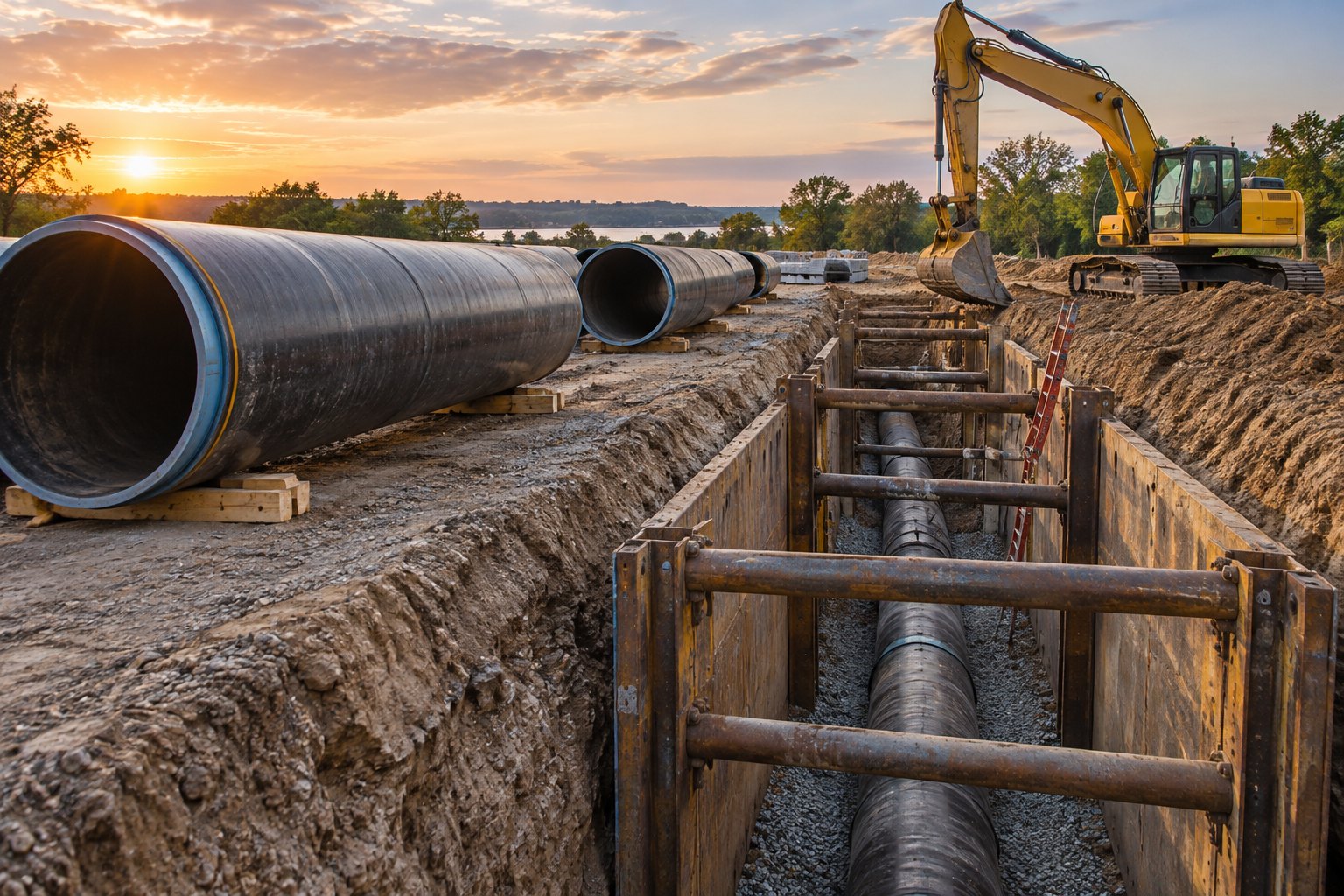
Installation can involve trench excavation, foundation preparation, bedding, pipe placement, and carefully specified backfill. Each pipe section must be positioned and joined according to the design and manufacturer requirements. Sewer grades and structure elevations deserve particular attention because gravity systems depend on their profiles. Waterline construction may require coordination around valves, fittings, service connections, and existing operating systems. Required protective measures and access controls should reflect the conditions encountered during trench work.
Inspecting buried pipework
Inspection points should be coordinated before trenches or connections become inaccessible to project representatives. The specifications may call for pressure testing, leakage checks, or other system-specific acceptance procedures. Bedding and backfill requirements also help define how installed pipes are supported and protected. When unexpected conditions affect the design, the responsible engineer and owner should review the issue. Accurate installation records can help document alignments, connections, tests, and approved field changes.
Utility work across different sites
Utility projects in Ohio and surrounding states may encounter seasonal groundwater and changing ground conditions. Work farther east can involve different agency requirements, surface constraints, and existing infrastructure arrangements. A local design and the utility owner's standards govern the details of each proposed connection. Share available plans, pipe sizes, installation limits, and anticipated construction dates when requesting a discussion. The APC team can review the described scope and its relationship to the overall site work.
Start the conversation.
Tell us where you’re building and what your project needs.