
A practical approach to milling
Asphalt milling removes a controlled portion of an existing pavement before subsequent surface work. The specified depth and limits depend on the pavement condition and the rehabilitation design. Milling can address transitions, surface irregularities, or removal needed for a planned overlay. The resulting surface must be coordinated with drainage features, structures, and adjoining pavement. The rehabilitation design determines how much existing asphalt must be removed from the roadway.
Assessing pavement and access
A pavement review and the construction drawings establish the areas and depths to be removed. Manholes, valve boxes, curbs, and bridge approaches may require special attention around the milling limits. Traffic control and access to neighboring properties influence how the operation can be staged. The project documents also identify the intended handling or reuse of removed asphalt material. These details help define the relationship between milling, cleanup, and the next paving operation.
Removing asphalt to the profile
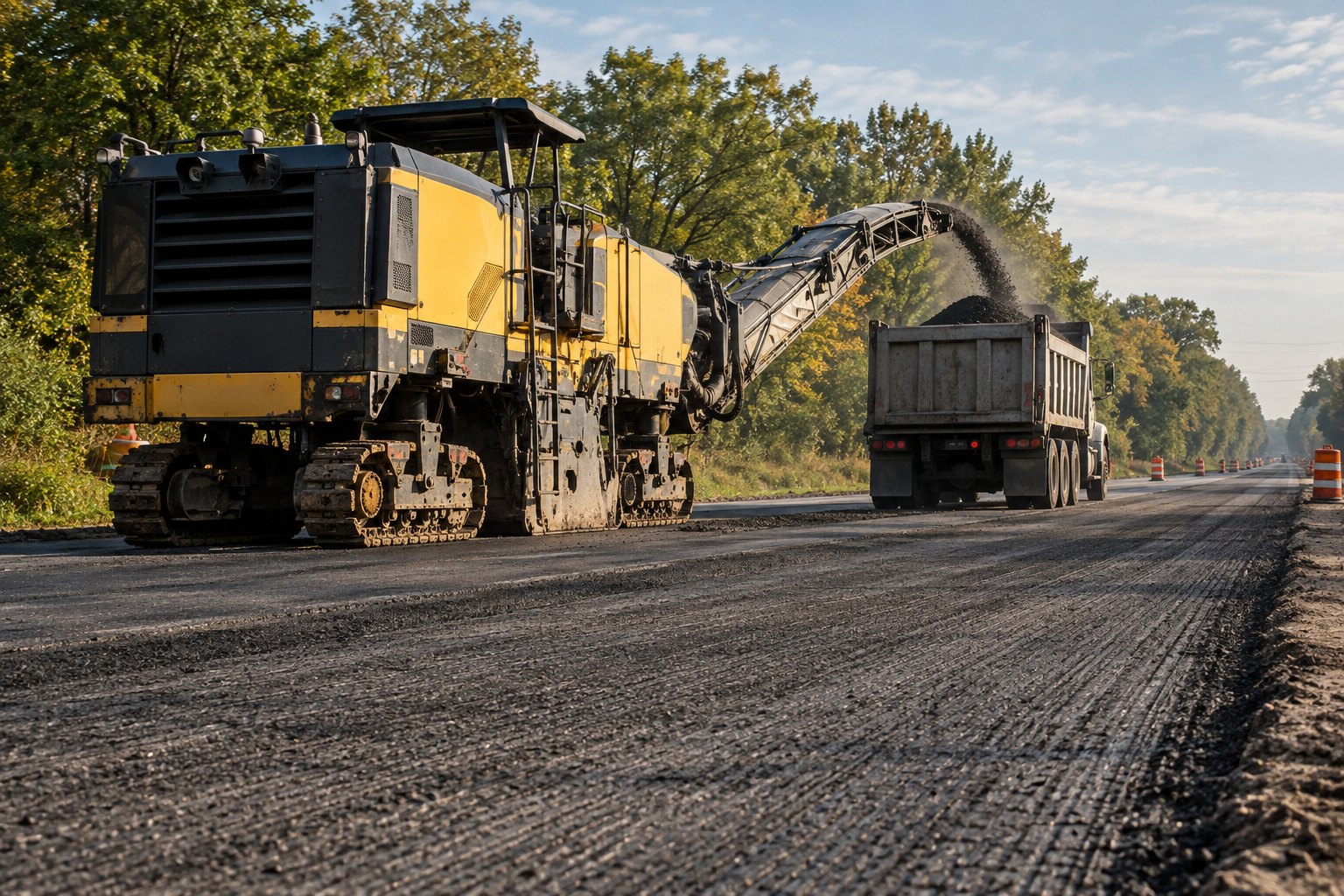
The milling equipment removes pavement along passes arranged to reach the specified profile and limits. Depth control and overlap between passes are important to achieving the required finished surface. Crews must account for changes in elevation near fixed structures and pavement edges. Removed material is handled according to the contract requirements and the available site arrangements. The exposed surface should be prepared as specified before it receives further treatment or paving.
Checking the milled surface
The project requirements may call for checks of milling depth, grade, and surface texture. Transitions and areas around utility structures should be reviewed against the approved details. Loose material or debris must be addressed in accordance with the work and paving specifications. Any unexpected pavement condition can be communicated to the owner or engineer for review. Records of the completed limits help coordinate the following resurfacing or repair activities.
Roadway milling conditions
Work on Midwest roads can be influenced by seasonal temperature changes and traffic demands. Eastern projects may present different corridor widths, access restrictions, and local disposal requirements. The appropriate milling plan depends on the actual pavement and the project-specific rehabilitation design. Share the limits, target depths, traffic arrangements, and proposed paving schedule with APC. This information supports a discussion of the removal scope and its connection to the finished surface.
Start the conversation.
Tell us where you’re building and what your project needs.