

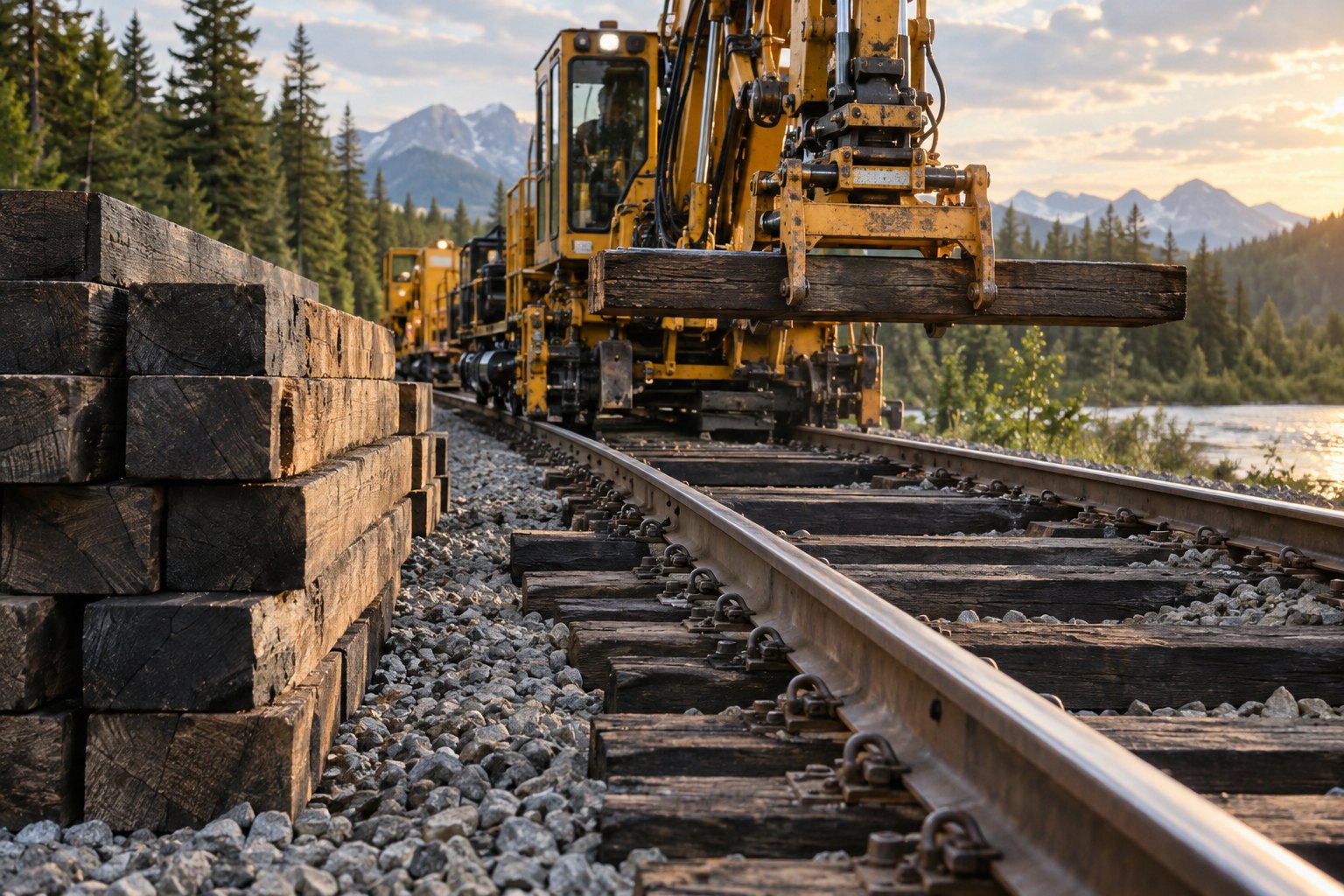
A practical approach to tie replacement
Railway ties support the rails and help maintain the track geometry required by the owner. Tie replacement targets locations or sections identified in a railway maintenance or rehabilitation plan. The specified tie type, spacing, fasteners, and ballast conditions determine the installation requirements. Work on an operating line must fit the railroad's authorized access and protection arrangements. The designated replacement locations establish where new ties and fasteners will be installed.
Locating ties for replacement
The owner's inspection information identifies the locations and quantities included in the proposed replacement. Existing track condition, access points, and nearby crossings affect equipment and material staging. The railway establishes operating windows and protection measures before personnel enter the work area. Replacement ties and associated fasteners must meet the requirements of the project documents. Planning also addresses how removed materials will be handled within the available site arrangements.
Installing replacement ties
The designated ties are removed and replacement units are positioned under the existing rail. Fasteners and supporting materials are installed or adjusted according to the owner's specified methods. Ballast handling and track surfacing may be included where the project scope calls for them. The work sequence should preserve the interfaces with adjoining ties and track components. Unexpected conditions beneath the removed material are reported to the responsible project representatives.
Checking tie placement
The railroad's standards determine required checks of tie placement, spacing, fastenings, and track geometry. Inspection points and records should be coordinated with the owner before the work window closes. Areas requiring further adjustment are addressed under the agreed construction and acceptance procedures. The final operating status of the track remains the responsibility of the railway owner. Documentation can identify completed locations and materials installed within the authorized replacement limits.
Ballast and access conditions
Frozen ground or wet ballast may influence the timing of tie work in the Midwest. Eastern rail facilities can introduce different access constraints, traffic patterns, and local site conditions. The appropriate installation approach depends on the owner's standards and the actual track condition. Share inspection findings, replacement quantities, access windows, and the intended schedule with APC. Those details support a discussion of the tie replacement scope and associated coordination.
Start the conversation.
Tell us where you’re building and what your project needs.