
A practical approach to track construction
Track construction assembles the rail, ties, fasteners, and supporting materials specified for a railway alignment. The work may serve a new connection, an expanded facility, or another engineered track project. Design details determine the geometry, component types, and interfaces with existing railway infrastructure. Access and operating protection are coordinated with the railroad responsible for the corridor. The alignment and connection points establish where new rail and supporting components will be placed.
Track layout and staging
The track plan establishes the alignment, elevations, material requirements, and connection points for construction. Roadbed readiness and drainage should be evaluated before track components are placed on the formation. Delivery locations and staging areas must accommodate the length and handling requirements of track materials. The railway owner's access windows determine when equipment and personnel can enter the work area. Coordination with nearby crossings and active tracks helps define the practical installation sequence.
Installing the track components
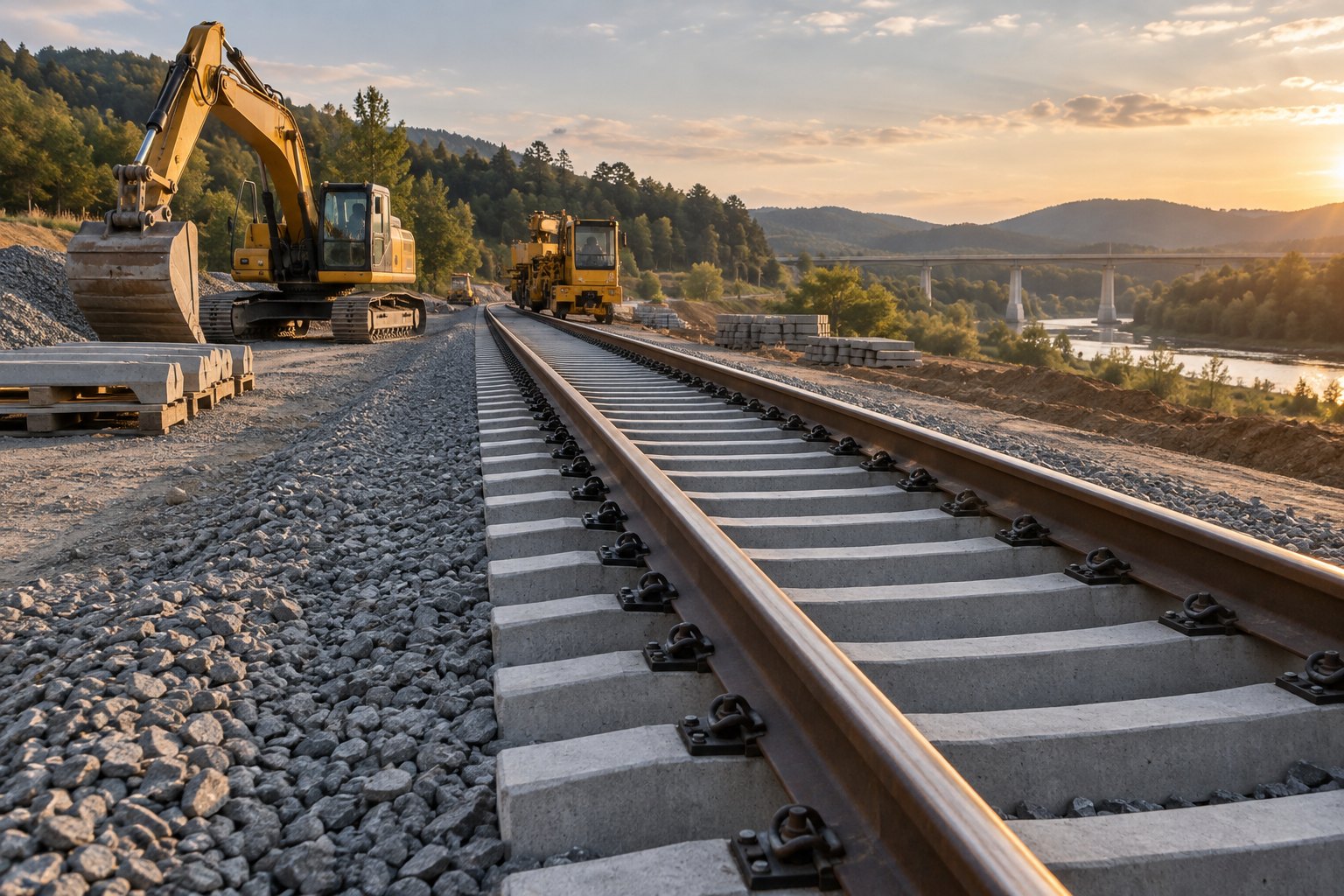
Construction may include placing specified ballast, positioning ties, laying rail, and installing the required fasteners. The approved design governs component spacing, rail connections, and the geometry of the track. Work at an existing connection must follow the owner's requirements for protection and operating access. Adjustment and surfacing activities are coordinated with the specified construction and acceptance sequence. The precise method depends on the track design, available equipment access, and site conditions.
Checking track geometry
Measurements of alignment, gauge, elevation, and connections are performed as required by the project documents. The railroad identifies applicable inspection points and the criteria for accepting the completed installation. Material identification and installation records can support review of the constructed track section. Any deviations or unexpected conditions should be brought to the responsible project representatives. Follow-up work is coordinated within the access arrangements established for the railway facility.
Construction across rail corridors
Seasonal moisture and freezing can affect roadbed readiness on tracks in the Midwest. Eastern corridors may have different terrain, access restrictions, and interfaces with existing facilities. The governing railroad standards and approved engineering remain specific to each proposed track project. Share alignment drawings, component specifications, access constraints, and the anticipated work schedule with APC. These details provide a starting point for discussing the construction scope and sequencing.
Start the conversation.
Tell us where you’re building and what your project needs.