

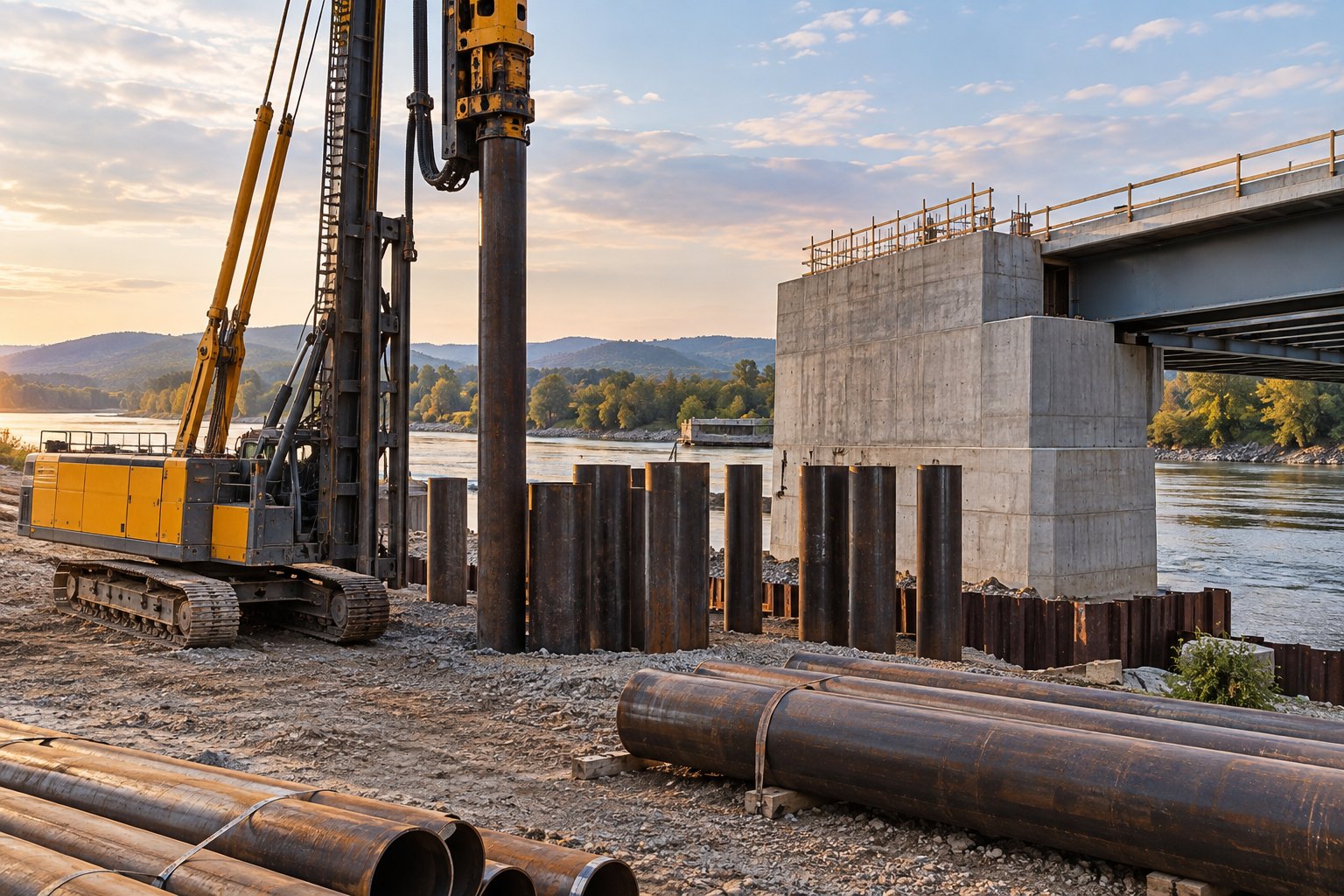
A practical approach to bridge foundation pile driving
Bridge foundation piles transfer structural loads into ground identified by the project's foundation design. Their size, material, location, and installation criteria depend on the bridge and subsurface conditions. The piling work must coordinate with the planned abutments, piers, and construction access. Waterways, traffic, or existing infrastructure can influence how the foundation locations are reached. Each support location connects the proposed pile arrangement to a bridge pier or abutment.
Bridge plans and foundation access
The design drawings and geotechnical report establish the pile layout and anticipated ground profile. The engineer specifies pile types, lengths, driving requirements, and any required testing. Existing bridge elements, utilities, and crossing operations should be considered in the staging plan. Water levels and temporary access arrangements may affect equipment positioning at individual supports. The project team should clarify inspection and monitoring responsibilities before driving begins.
Driving piles at bridge supports
Piles are positioned at the designated foundation locations and installed in the approved sequence. Driving equipment and methods must meet the project specifications and suit the site conditions. Connections or splices are completed using the details shown in the construction documents. The work must maintain coordination with temporary supports and the bridge construction stages. Unexpected obstructions or pile response should be reported to the responsible engineer.
Reviewing bridge foundation records
Installation logs may record pile identification, lengths, elevations, and observations during driving. Survey checks help verify that the installed elements match the foundation layout. The specifications determine whether load testing or monitoring is required for acceptance. Pile heads are prepared to receive the designed cap or other connecting structure. The owner and engineer review discrepancies before the foundation work moves to subsequent stages.
Crossing and access conditions
Bridge sites in the Midwest may face seasonal water changes and constrained roadway access. Eastern crossings can involve different terrain, neighboring structures, and permitting conditions along waterways. The appropriate foundation and installation requirements are determined for each individual bridge. Provide foundation plans, ground information, access constraints, and the proposed schedule when contacting APC. These details help define the pile driving scope and its interfaces with the bridge work.
Start the conversation.
Tell us where you’re building and what your project needs.